Engineering Advanced Wound Care Dressings for Modern Healthcare
Posted by Parafix Team
Posted on 16th March 2026
reading time
-
Getting Started
Wound care dressings are no longer simple protective coverings. Today, they are highly engineered medical systems designed to create controlled healing environments across acute and chronic applications. From post-operative incisions to diabetic and pressure ulcers, modern wound care dressings must manage moisture, protect against contamination, minimise skin trauma and maintain comfort throughout the wear cycle.
An advanced wound care dressing must balance breathability, adhesion performance, conformability and exudate management — all while meeting strict regulatory and manufacturing standards. For medical device OEMs, success increasingly depends on how medical-grade adhesives, speciality films, foams and hydrocolloid materials are integrated and scaled into reliable, manufacturable products.
As wound management become more sophisticated, the precision with which these materials are converted and assembled plays a decisive role in product performance and commercial scalability.
-
The Manufacturing Ecosystem Behind Modern Wound Care Dressings
The development of wound care dressings typically involves collaboration across multiple specialist areas.
Global material innovators formulate advanced adhesive chemistries, breathable films, silicone systems and absorbent materials engineered for clinical performance. Specialist converting partners process these materials through precision die-cutting, lamination and cleanroom manufacturing to create functional components. OEM manufacturers integrate those components into finished wound care dressings and bring them to market under regulated frameworks.
This layered supply model enables continuous material innovation while allowing OEMs to focus on clinical design and regulatory strategy.
-
Core Engineering Considerations in Advanced Wound Care Dressing Design
The performance of an advanced wound care dressing depends on how multiple functional layers interact under real-world conditions. Moisture control, adhesion stability and patient comfort must operate together consistently throughout the product’s intended wear time.
Moisture ManagementMoisture ManagementEffective wound care dressings maintain an optimal moisture balance. Hydrocolloids and hydrogels regulate hydration at the wound interface, while medical-grade foams absorb exudate across varying wound types. Converting precision influences vapour transmission rates, sealing integrity and overall absorption efficiency, ensuring consistency from prototype to full-scale production.
Breathability and Barrier PerformanceBreathability and Barrier PerformanceAn advanced wound care dressing must allow moisture vapour transmission while protecting against bacteria and external contaminants. Film selection alone is not sufficient — adhesive pattern design, die-cut accuracy and edge sealing all influence barrier reliability and wear stability.
Low-Trauma AdhesionLow-Trauma AdhesionAdhesives secure wound care dressings in place, but must also protect skin integrity. Silicone systems are frequently chosen for fragile skin applications, while acrylic adhesives may provide stronger fixation where extended wear is required. Adhesive thickness, lamination consistency and cut geometry directly affect peel force and repositionability.
Conformability and Mechanical ComfortConformability and Mechanical ComfortDressings must move naturally with the body without lifting or creating stress points. Foam density, film elasticity and adhesive flexibility all contribute to patient comfort. Precision die-cutting ensures consistent geometries that support performance across different anatomical sites.
-
Scaling Advanced Wound Care Dressing Manufacture
Designing an advanced wound care dressing is only part of the challenge. Ensuring that the design can be manufactured reliably at scale is equally critical.
Modern wound care dressings often combine double-coated tapes, silicone adhesive layers, speciality films, hydrocolloids, nonwoven substrates and NPWT drape materials. Each layer must align precisely to preserve breathability, adhesion performance and structural integrity.
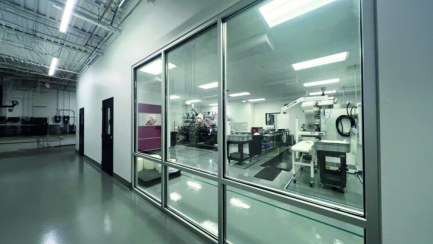
Controlled lamination pressures and Class 7 cleanroom manufacturing environments help maintain repeatability and regulatory confidence as production volumes increase.
-
Converting Strategy in Wound Care Dressing Manufacturing
As wound care dressings become more technically advanced, OEMs must decide whether to build converting capability internally or collaborate with a specialist partner.
Partnering with a Specialist Converting Expert
Advantages- Access to advanced adhesive and material integration expertise
- Reduced capital investment in converting and cleanroom infrastructure
- Faster prototyping and iterative development
- Scalable roll-to-roll production
- Flexibility to integrate materials from multiple global innovators
Considerations- Requires early collaboration during product design
- Clear technical specification alignment is essential
-
Acute and Chronic Wound Care Dressings: Different Engineering Priorities
Acute wound care dressings, such as post-operative films or surgical incise products, prioritise sterile barrier performance and predictable short-term wear. Structural stability and secure fixation are key design drivers.
Chronic wound care dressings introduce greater complexity. Extended wear duration, higher exudate levels and fragile surrounding skin demand low-trauma adhesives and breathable constructions. Material integration strategies must adapt accordingly, ensuring that each advanced wound care dressing is engineered for its specific clinical application.
-
The Future of Wound Care Dressings
Wound care dressings will continue to evolve as new materials and adhesive technologies emerge. As functionality increases, the structural complexity of advanced wound care dressing systems will grow, reinforcing the importance of precision converting and scalable manufacturing processes.
For OEMs and wound care innovators, competitive advantage will depend not only on material selection, but on the ability to integrate those materials into reliable, manufacturable systems.
In modern healthcare, the performance of wound care dressings is defined as much by engineering and manufacturing precision as by clinical formulation. Those who master both will shape the next generation of advanced wound care dressing solutions.
-
Cleanroom Manufacturing: Standards, Processes + Best PracticesCleanroom Manufacturing: Standards, Processes + Best Practices
-
ISO 7 Cleanroom Manufacturing: Requirements, Standards and ApplicationsISO 7 Cleanroom Manufacturing: Requirements, Standards and Applications